
Organizational Resilience Amid Regional Instability
Continuity plans are written for a fire or an outage on your own site. Regional disruption arrives from outside and breaks the assumptions those plans rest on.

A different kind of disruption
Business continuity planning grew up around events inside the fence, such as a fire, a system outage or an incident at one site. These can be scoped, because the organization knows its assets and can imagine losing one of them.
Instability across a region is another category. It can close airspace, interrupt shipping, restrict payments and make travel unsafe, all at once and with little notice. Organizations that operate in volatile regions, or depend on them for supply, face this risk whatever the news is on a given day.
This article deals with keeping operations running. For the effect on strategy, see stress-testing strategy against regional instability, and for acquisitions, see geopolitical due diligence.
The assumptions that fail
Most organizations with regional exposure already have a plan, because insurers, regulators and boards require one. The weakness is in what the plan takes for granted.
Exhibit 1: Common continuity-plan assumptions and what regional disruption does to each.
| Plan assumes | What happens in a regional disruption | Capability needed |
|---|---|---|
| Named decision-makers can be reached | They are travelling, cut off or evacuating | Authority that passes automatically to a trained deputy |
| The crisis room and main site are usable | Access is restricted | A way to run the response from elsewhere |
| Usual transport routes are open | A corridor or airspace closes | Pre-identified alternatives for people and product |
| Banking and payments work normally | Transfers are delayed or restricted | Contingency arrangements for payroll and suppliers |
| Staff know their roles | The plan has not been exercised | Rehearsal under realistic conditions |
What good looks like
A resilient organization treats its plan as a set of capabilities it has demonstrated, and three of them matter most.
- A crisis management structure in which decision rights hold when the usual people are unreachable.
- Emergency response protocols rehearsed without warning, so they are tested with whoever is on duty.
- Contingency routes for people, product and capital that do not rely on one corridor staying open.
Each can be checked. Either a deputy has made a real decision in an exercise or they have not, and either an alternate route has been priced and contacted or it is a line in a document.
Why rehearsal has to be unannounced
An announced drill tells people when to be ready, so the right managers are on site and have reread the plan. Real events do not offer that courtesy.
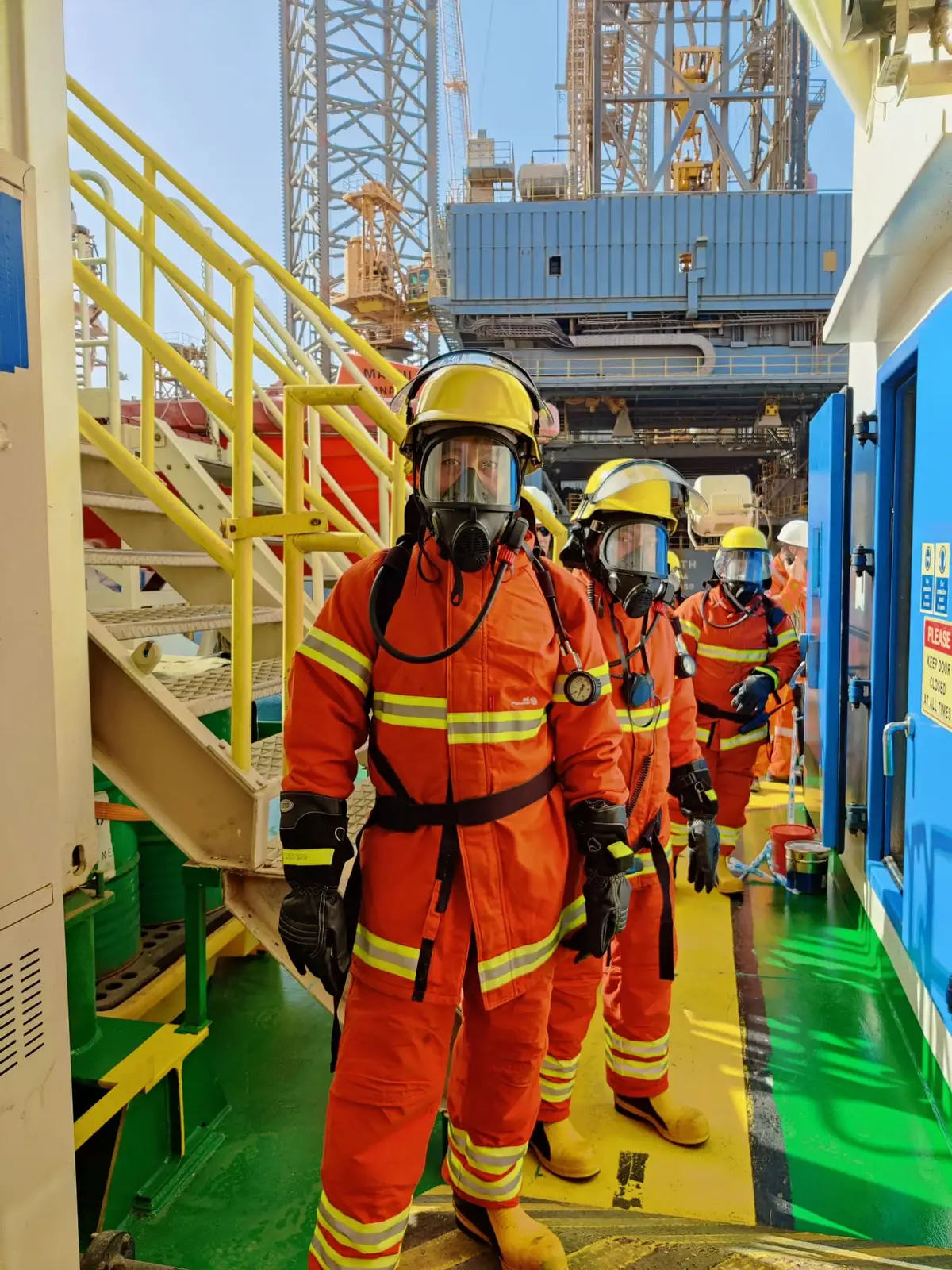
In one composite engagement, an upstream operator found during a well control incident that the command structure on paper did not match who was on site. It rebuilt its response in three layers and tested each with unannounced tabletop exercises. Read the emergency response case study.
The cause there was an operational incident, not regional instability, yet the lesson transfers directly. A plan that has only been filed will fail at the point where it meets absent people and closed routes.
Actions for operations leaders
- Name a deputy with full authority for every crisis decision role, and tell both people.
- Run one exercise this quarter without announcing the date.
- List the routes your people, product and payments depend on, and identify an alternative for each.
- Check when the continuity plan was last tested, as opposed to last reviewed.

Test your continuity plan
We can run an unannounced tabletop exercise against your existing plan and show where authority, communication or routes would fail.

Why Process Safety Management Fails Quietly
A HAZOP study is accurate on the day it is signed. Each modification afterwards is a small bet that nothing relevant has changed.

When Near-Miss Reports Stop: A Process Safety Warning Sign
A falling near-miss count at a chemical plant usually means operators no longer believe reporting achieves anything. Supervisors can see the signs first.
Contractor Oversight Standards for Publicly Funded Programs
One procurement policy can still produce a different oversight practice on every project. In a public program, a finding at one site is a finding against all of them.