Repositioning Safety Culture Beyond Compliance Metrics
An industrial manufacturer whose favorable safety record concealed a systemic underreporting pattern among frontline crews.
We found that a good safety record was hiding underreporting on the floor, and near-miss reports more than doubled within six months.
Situation
Recordable incident rates are lagging indicators. They count harm that has already happened. Near-miss reports are among the few leading indicators available, because they capture a hazard before anyone is hurt. A falling near-miss count and an improving safety record can therefore be two different things.
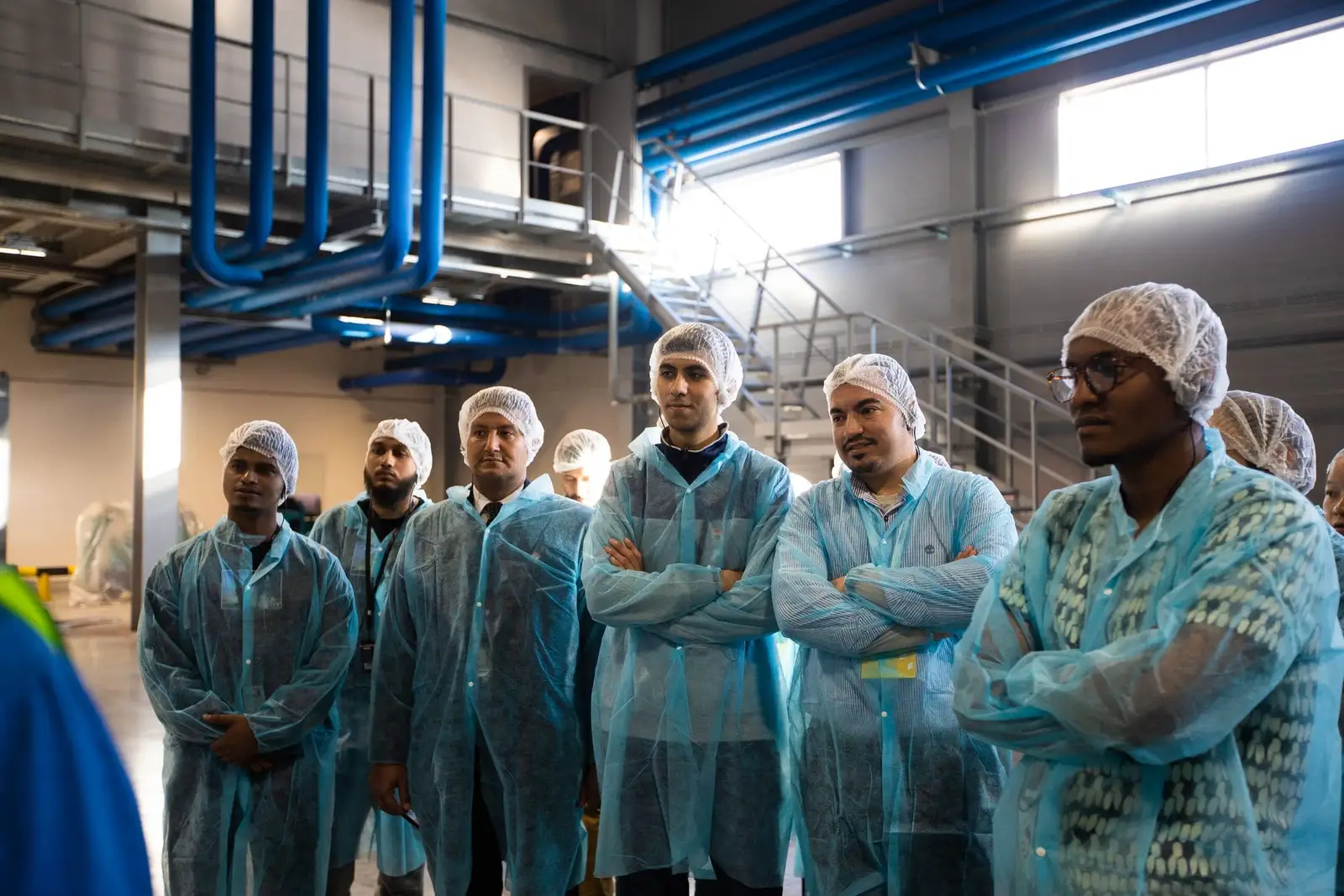
This manufacturer's incident rates sat within industry norms. Frontline interviews told another story. Supervisors took a near-miss report as a reflection on their shift, so crews had stopped filing them. The number leadership reviewed was measuring willingness to report, not exposure to hazard.
What we did
We kept the culture assessment apart from the compliance audit. People questioned under an audit banner tend to describe the system as it is meant to work. We used anonymous surveys, frontline interviews and direct observation of how supervisors responded when something was raised.
| Step | Method | Purpose |
|---|---|---|
| Assess | Anonymous surveys, interviews, observation | Hear what crews would not tell an auditor |
| Coach | Recorded role-play, reviewed one-to-one with each supervisor | Practice receiving a report without assigning blame |
| Verify | Follow-up frontline interviews | Confirm crews saw the change |
| Monitor | KP-Safe computer vision, from the group's Digital company | Track PPE and zone compliance between walkthroughs |
Impact
- Six months after the supervisor program, crews were filing more than twice as many near-miss reports. We read that as a leading indicator improving, since the hazards had been there all along.
- Every supervisor went through the coaching. Later interviews with frontline staff, run independently of the supervisors, confirmed that responses to reports had changed.
- PPE and zone compliance are now tracked continuously by KP-Safe instead of only during periodic walkthroughs.
What made it work
The program targeted a single moment: what a supervisor says and does when handed a near-miss report. Safety literature calls the principle a just culture. Reviewing each supervisor's own recorded role-play made it personal and specific.
Culture work and monitoring technology supported each other. The first changed what people were willing to report, and the second covered the hours when nobody was watching.
Near-miss reporting more than doubled within six months
Changed supervisor behavior confirmed in follow-up frontline interviews
Continuous PPE and zone monitoring added through KP-Safe
- Sector
- Industrial Manufacturing
- Practice area
- HSE Advisory
- Client profile
- Industrial manufacturer
- Services
- Safety culture assessment, supervisor coaching, computer-vision monitoring
- Key phases
- Culture assessment; supervisor program; results at six months
- Group companies
- Advisory with Digital (KP-Safe)
This case study is a composite drawn from multiple engagements. Client details have been changed and combined to protect confidentiality, and figures are representative rather than attributable to any single client.
Facing a comparable challenge?
Tell us about your organization and we will route you to the right partner.

Getting Ready for ISO 45001 Certification
Read case study →
Contractor HSE Prequalification and Monitoring
Read case study →
Rebuilding Emergency Response After a Well Control Incident
Read case study →
Closing the Gap Between Documented and Actual Process Safety
Read case study →
Barrier Management Across Aging Grid Assets
Read case study →
Process Safety and Asset Integrity Beyond the Checklist
A procedure on file and a barrier that works are different things. Bowtie analysis shows which one you have.

Contractor Safety Management for an Outsourced Workforce
Subcontracting the work does not subcontract the duty. Whoever controls the site answers for safety on it.
Why Safety Culture Metrics Can Mislead Leadership
A falling incident rate can mean the site is safer. It can also mean people have stopped reporting. The board dashboard should be able to tell which.