
Rebuilding Emergency Response After a Well Control Incident
An upstream oil & gas operator running multiple production sites across a single basin.
We rebuilt the operator's emergency response in three tested layers after a well control incident showed its plan had never been rehearsed.
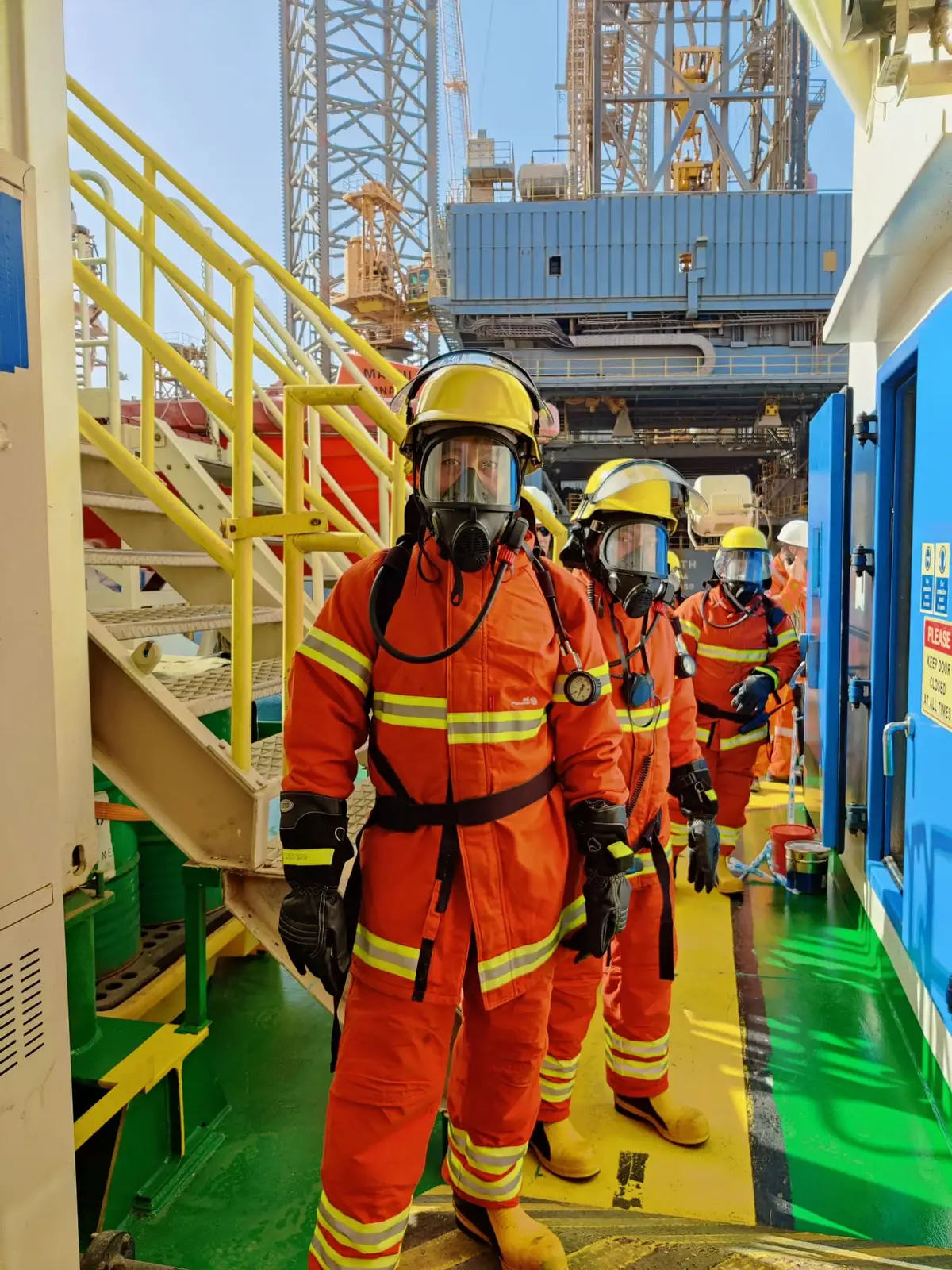
Situation
Most upstream emergency plans are built on the Incident Command System, which assigns roles and escalation authority regardless of who is on shift. The system is only as good as an organization's proven ability to activate it. Regulatory filings confirm that a compliant plan exists. They do not test whether it can be carried out.
This operator's plan had not been exercised under realistic conditions since it was written. Then a well control incident forced an unplanned shutdown and evacuation at two adjacent production sites. The people named in the plan were not the people present. Mobilization and external communication fell behind events, which added regulatory exposure to the operational risk.
What we did
We replaced the single document with three connected layers and validated each one in exercises nobody was warned about.
| Layer | What it covers | Design choice |
|---|---|---|
| Business continuity | Loss of critical production and processing equipment | Planned by equipment, not by site |
| Crisis management | Named decision-makers and escalation authority | Authority independent of shift assignment |
| Emergency response | On-site protocol during an incident | Integrated with the operator's existing QHSE management system |
Impact
- The operator ran four tabletop exercises in the first year. Before the engagement it had run none.
- Full incident command activation now has a target of less than 90 minutes. That target was tested in unannounced exercises across both production sites. It is a target, not a measured average.
- Each critical decision role has a backup who has been trained, which removes the single point of failure the incident exposed.
What made it work
An announced exercise shows whether people perform when they expect a test. An unannounced one shows whether the command structure works with whoever happens to be on site, which is the question the real incident asked.
Three tested layers in place of one static continuity document
Incident command activation target of under 90 minutes, exercised at both sites
A trained backup assigned to every critical decision-making role
- Sector
- Oil & Gas: Upstream Operations
- Practice area
- HSE Advisory
- Client profile
- Upstream operator with multiple production sites
- Region
- Single basin
- Services
- Business continuity, crisis management, emergency response redesign
- Key phases
- Four unannounced tabletop exercises in the first year
This case study is a composite drawn from multiple engagements. Client details have been changed and combined to protect confidentiality, and figures are representative rather than attributable to any single client.
Facing a comparable challenge?
Tell us about your organization and we will route you to the right partner.

Repositioning Safety Culture Beyond Compliance Metrics
Read case study →
Getting Ready for ISO 45001 Certification
Read case study →
Contractor HSE Prequalification and Monitoring
Read case study →
Closing the Gap Between Documented and Actual Process Safety
Read case study →
Barrier Management Across Aging Grid Assets
Read case study →
Process Safety and Asset Integrity Beyond the Checklist
A procedure on file and a barrier that works are different things. Bowtie analysis shows which one you have.

Contractor Safety Management for an Outsourced Workforce
Subcontracting the work does not subcontract the duty. Whoever controls the site answers for safety on it.
Why Safety Culture Metrics Can Mislead Leadership
A falling incident rate can mean the site is safer. It can also mean people have stopped reporting. The board dashboard should be able to tell which.