Getting Ready for ISO 45001 Certification
A mid-sized upstream operator preparing for ISO 45001 certification.
We rebuilt the operator's safety management system around what crews do in the field, and it was certified with no nonconformities at the Stage 2 audit.

Situation
ISO 45001:2018 replaced OHSAS 18001 as the international standard for occupational health and safety management systems. For upstream operators it has become a commercial gate. Major operators and joint-venture partners increasingly ask for it at prequalification.
This operator's system had grown by accretion. A procedure was added after an incident, a policy was updated for a regulatory change, a checklist came across with an asset transfer. Nobody owned the document lifecycle that Clause 7.5 calls for. A near-miss the previous year made the risk concrete. Crews had been completing a permit-to-work step out of the documented sequence, and nobody could say which of the operator's dozens of procedures still described real work.
What we did
We ran two workstreams at once. One was a formal gap assessment against ISO 45001 and the relevant API recommended practices. The other was field verification. We shadowed crews through permit-to-work cycles, lockout/tagout and job safety analysis (JSA) briefings to see what happened on site, without reference to the paperwork.
| Clause area | Documents before | What we saw in the field | Resolution |
|---|---|---|---|
| 5.4: Worker participation | Policy existed, undated | Inconsistent across crews | One participation protocol, tested in the field |
| 6.1.2: Hazard identification | Generic site-wide JSA template | Crews improvised site-specific hazards | JSA template rebuilt per site class and validated by crews |
| 8.1: Operational control (permit-to-work) | Sequence did not match practice | Crews had reordered steps informally | Procedure rewritten to the verified safe sequence |
| 9.2: Internal audit | No standing internal audit function | No independent verification cycle | Internal audit team recruited and trained |
After the rebuild we ran a mock audit structured like the certification body's Stage 1 document review and Stage 2 on-site audit.
Impact
- Stage 1 closed with no major nonconformities and two minor observations, both resolved before Stage 2 was scheduled.
- Stage 2, the on-site implementation audit, raised nothing in any classification, and the certificate was granted.
- About a third of the safety documentation was retired. Those procedures had no corresponding field practice.
- A trained internal team now runs the Clause 9.2 audit cycle itself. Certification holds for a three-year cycle with annual surveillance, and the operator's first surveillance audit falls twelve months after certification.
What made it work
Where crews were already doing the job safely but differently from the document, we changed the document. Forcing a paper process onto sound practice would have recreated the gap behind the near-miss.
A Stage 2 auditor asks to see the work, not only the procedure. A smaller set of procedures that crews follow exactly holds up better under that test than a large library an auditor can sample and find drifting.
ISO 45001 certification granted with zero nonconformities at Stage 2
Documentation set reduced by approximately one-third
An internal audit team trained ahead of the first surveillance audit
- Sector
- Oil & Gas: Production
- Practice area
- HSE Advisory
- Client profile
- Mid-sized upstream operator
- Services
- ISO 45001 gap assessment, field verification, mock audit, internal auditor training
- Key phases
- Gap assessment and field verification; mock audit; Stage 1 and Stage 2 audits
This case study is a composite drawn from multiple engagements. Client details have been changed and combined to protect confidentiality, and figures are representative rather than attributable to any single client.
Facing a comparable challenge?
Tell us about your organization and we will route you to the right partner.

Repositioning Safety Culture Beyond Compliance Metrics
Read case study →
Contractor HSE Prequalification and Monitoring
Read case study →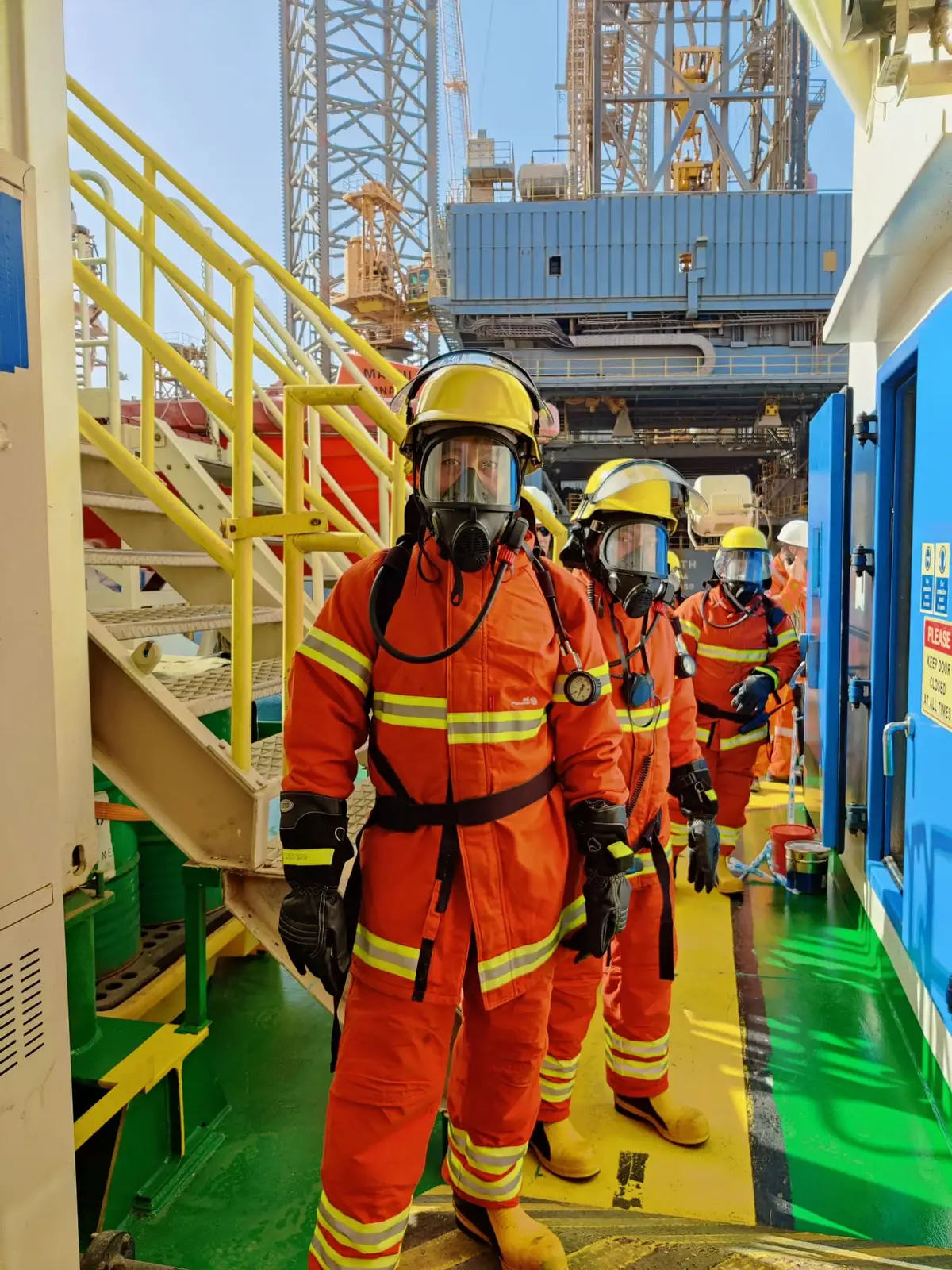
Rebuilding Emergency Response After a Well Control Incident
Read case study →
Closing the Gap Between Documented and Actual Process Safety
Read case study →
Barrier Management Across Aging Grid Assets
Read case study →
Process Safety and Asset Integrity Beyond the Checklist
A procedure on file and a barrier that works are different things. Bowtie analysis shows which one you have.

Contractor Safety Management for an Outsourced Workforce
Subcontracting the work does not subcontract the duty. Whoever controls the site answers for safety on it.

Why Safety Culture Metrics Can Mislead Leadership
A falling incident rate can mean the site is safer. It can also mean people have stopped reporting. The board dashboard should be able to tell which.