
Barrier Management Across Aging Grid Assets
A regional power generation and transmission operator managing a mixed fleet of thermal and renewable assets.
We checked the operator's safety-critical equipment against its design intent and fixed three degraded barriers ahead of a regulatory audit.
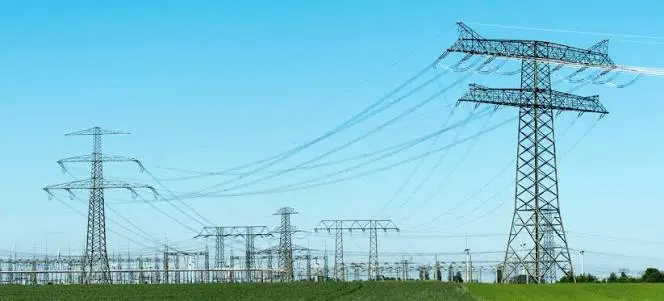
Situation
Barrier management tracks the specific equipment and controls that stop a hazard becoming an incident, and checks each against its original design intent. It underlies the protection-system maintenance programs required by NERC's PRC series of Reliability Standards, notably PRC-005, and the wider asset-management approach set out in ISO 55001.
A maintenance record proves an inspection took place. It does not prove the barrier still does its job. This operator's program rested on the first kind of evidence. An internal review raised the gap to board level before an upcoming regulatory audit cycle, which meant the operator found it before a regulator did.
What we did
We set up a program that follows each safety-critical barrier across the generation and grid fleet. Field verification ran at the same time as the documentation review, so the operator ended up with one picture of asset condition instead of two that might disagree.
| Question | Maintenance record answers | Barrier verification answers |
|---|---|---|
| Was the equipment serviced? | Yes, with a date | Yes, and what the service restored |
| Does it still perform its protective function? | Not addressed | Tested against design intent |
| What should the board see? | Completion rates | Barrier condition across the fleet |
Impact
- Verification found three barriers that had degraded. All three were repaired before the scheduled audit, and before any of them led to a reportable misoperation or a forced outage.
- Barrier condition is now verified on a continuing cycle, which the operator did not have before.
- The board went into the audit with evidence of control, where previously it had a documentation gap.
What made it work
Each check asked whether the barrier still performs the function its design assumed. Being serviced on time was not enough to pass.
Coverage was complete. Every generation and grid asset was in scope, so no part of the fleet relied on the older, paper-only assurance.
Three degraded barriers remediated ahead of the scheduled audit
The operator's first continuous asset-integrity verification cycle
An evidenced compliance position for the board before the audit
- Sector
- Power & Utilities
- Practice area
- HSE Advisory
- Client profile
- Regional generation and transmission operator, thermal and renewable fleet
- Services
- Barrier management program, field verification, audit preparation
- Key phases
- Field verification and document review in parallel, completed before the audit cycle
This case study is a composite drawn from multiple engagements. Client details have been changed and combined to protect confidentiality, and figures are representative rather than attributable to any single client.
Facing a comparable challenge?
Tell us about your organization and we will route you to the right partner.

Repositioning Safety Culture Beyond Compliance Metrics
Read case study →
Getting Ready for ISO 45001 Certification
Read case study →
Contractor HSE Prequalification and Monitoring
Read case study →
Rebuilding Emergency Response After a Well Control Incident
Read case study →
Closing the Gap Between Documented and Actual Process Safety
Read case study →
Process Safety and Asset Integrity Beyond the Checklist
A procedure on file and a barrier that works are different things. Bowtie analysis shows which one you have.

Contractor Safety Management for an Outsourced Workforce
Subcontracting the work does not subcontract the duty. Whoever controls the site answers for safety on it.

Why Safety Culture Metrics Can Mislead Leadership
A falling incident rate can mean the site is safer. It can also mean people have stopped reporting. The board dashboard should be able to tell which.