
Redesigning Shift Operations Around Actual Workflow
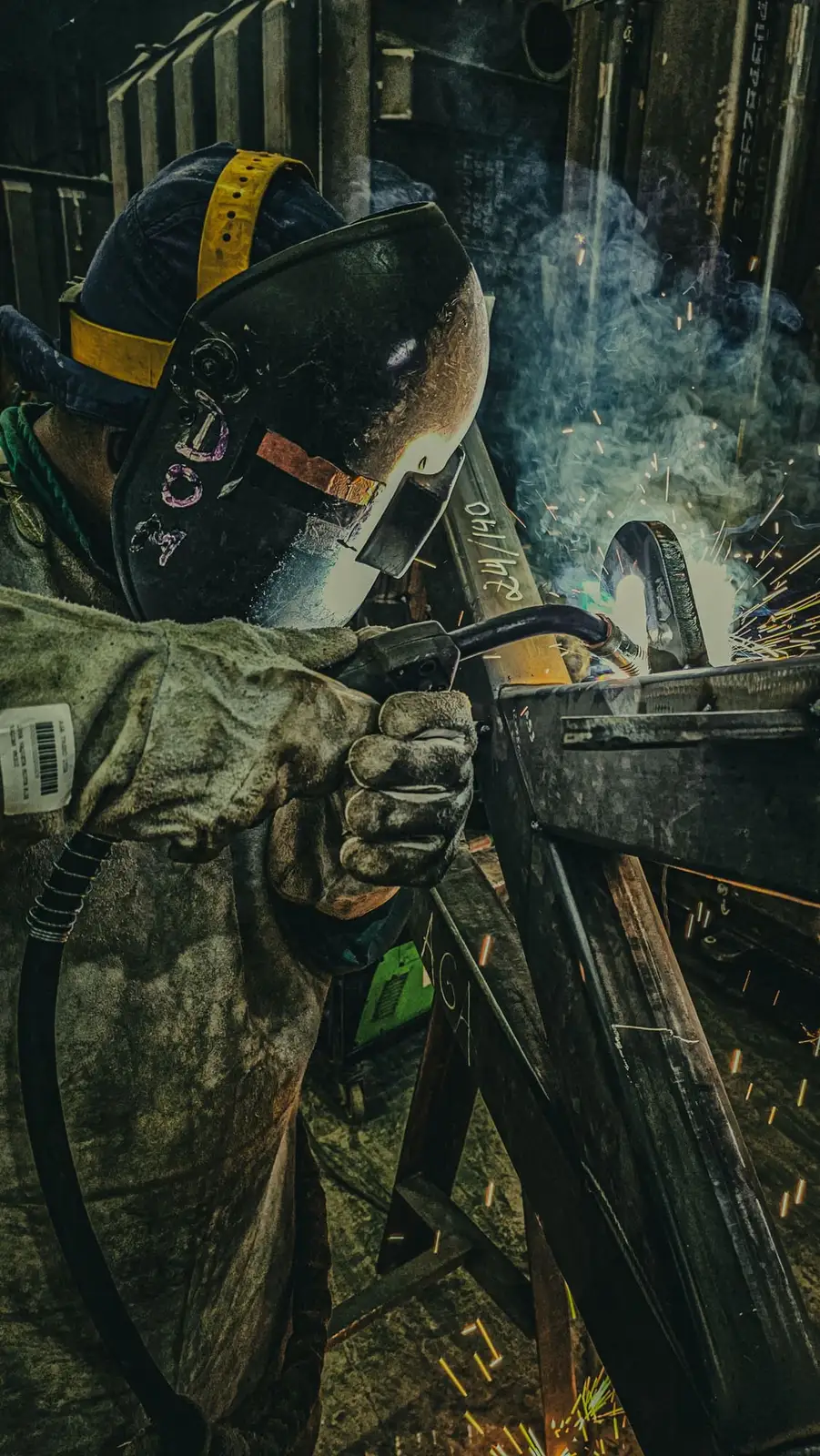
A metals fabrication plant operating three shifts without a unified operating model.
We traced the plant's quality variance to the handoff between shifts, and quality holds linked to handoffs fell by roughly 45 percent.
Situation
Shift handover is a recognized failure point in continuous operations. Bodies such as the Center for Chemical Process Safety treat it as a risk category of its own, because information about equipment state, work in progress and open issues has to pass between people who barely overlap.
At this plant, documented reporting lines and standard work had drifted away from practice. Each supervisor had built a personal method for setting priorities. Quality problems clustered at the change of shift, where work in progress, tooling state and material status changed hands with no agreed standard.
What we did
We mapped the plant as it ran, on the floor, across all three shifts. The documented process had already proved unreliable as a guide. The redesign concentrated on the handoff: what information must transfer, and who decides when outgoing and incoming supervisors disagree on priorities.
| Handoff element | Before | Redesigned standard |
|---|---|---|
| Information transferred | Informal and dependent on the supervisor | A defined checklist: equipment state, work in progress, unresolved issues |
| Handoff duration | Unstructured and variable | A five-minute overlap briefing at every shift change |
| Decision ownership | Unclear when priorities conflicted | Named ownership for the handoff window |
One shift pairing ran the new protocol for three weeks before anyone else adopted it.
Impact
- Quality holds attributed to shift handoffs fell by about 45 percent after the five-minute overlap briefing between outgoing and incoming supervisors became standard.
- Decision authority is now matched across supervisors, which removed a source of friction nobody had previously diagnosed.
- Adoption reached all three shifts with supervisor support already in place from the pilot.
What made it work
The pilot let supervisors shape the checklist under real conditions. By rollout, the protocol was something their peers had tested, not something handed down.
We also changed what was measured. Looking at the transition between shifts, instead of output within each shift, is what made the pattern visible in the first place.
Handoff-related quality holds cut by approximately 45 percent
Supervisors on every shift now hold the same decision authority
Supervisor support secured before the plant-wide rollout
- Sector
- Metals Fabrication
- Practice area
- Transformation & Organization
- Client profile
- Fabrication plant running three shifts
- Services
- Operating-model mapping, handoff redesign, change plan
- Key phases
- Floor observation; three-week pilot; plant-wide rollout
This case study is a composite drawn from multiple engagements. Client details have been changed and combined to protect confidentiality, and figures are representative rather than attributable to any single client.
Facing a comparable challenge?
Tell us about your organization and we will route you to the right partner.
Standardizing Rig Move Execution Across a Fleet
Read case study →
Realigning Sales and Delivery Around the Customer Journey
Read case study →
A Scalable Job Architecture for a Multi-Acquisition Firm
Read case study →
Building Leadership Capability Ahead of Scale
Read case study →
A Right-Sized HR Operating Model for Current Scale
Read case study →
Rebuilding Governance for a Public Infrastructure Authority
Read case study →
The Hidden Cost of an Undocumented Operating Model
The org chart shows how work was meant to flow. How it really flows is usually written down nowhere.

Rig Move Efficiency Is a Leadership Problem
The gap between a fast rig move and a slow one is set in planning and briefing, well before the first truck arrives.

Designing Operations Around the Customer Experience
Customers do not see departments. They see what happens to their order as it passes between them.